21
Apr
Building Sustainable Platforms: Creating Lasting Impact in Public Health Initiatives
Dr Ashutosh Mishra
Over the last two decades, my journey in leading and managing various public health initiatives has led me to a profound realization: sustainable outcomes in public health projects are elusive unless we prioritize the platforms through which these initiatives are implemented. As dedicated public health practitioners, our primary focus often centres on delivering interventions, expecting sustainability to naturally follow. However, this approach often falls short for various reasons.
One of the integral pieces of making an intervention successful and sustainable lies in separating the ‘intervention’ itself from the ‘platform’ facilitating its execution. What then drives impact is not just the evidence-based intervention, but its execution through a platform and all necessary processes built into it that is mature enough to self-propel and ensure sustainability beyond a limited funding cycle.
Notably, platform strengthening is always intervention agnostic — doesn’t matter if it’s a nutrition intervention to improve vitamin A coverage or an intervention to improve contraceptive equity by involving male members in family planning. The very nature of a larger platform, independent of any initiative, sets an entire cycle into motion, making the intervention self-driven even in the absence of any resource-intensive external drivers. This concept mirrors Maxwell’s tipping point theory, where a critical threshold triggers a system to reorganize and advance abruptly and irreversibly, pushing it forward.
CLAN shines through
‘Platform thinking,’ as experts refer to, emphasizes several key principles. First, it elevates systems thinking by fostering distributed action among system players. This requires a deep understanding of communities, their needs, aspirations, and their capacity to identify and solve problems they deem important. And two, platforms do not offer solutions but empower communities to solve their own challenges. Third, successful platforms thrive on collaboration, bridging individuals, markets, and governments. Lastly, the effectiveness of interventions hinges on community ownership and involvement, emphasizing the importance of initiatives being ‘by the community’ as much as ‘for and of the community.’ The pivotal question then arises on how we can then create these platforms?
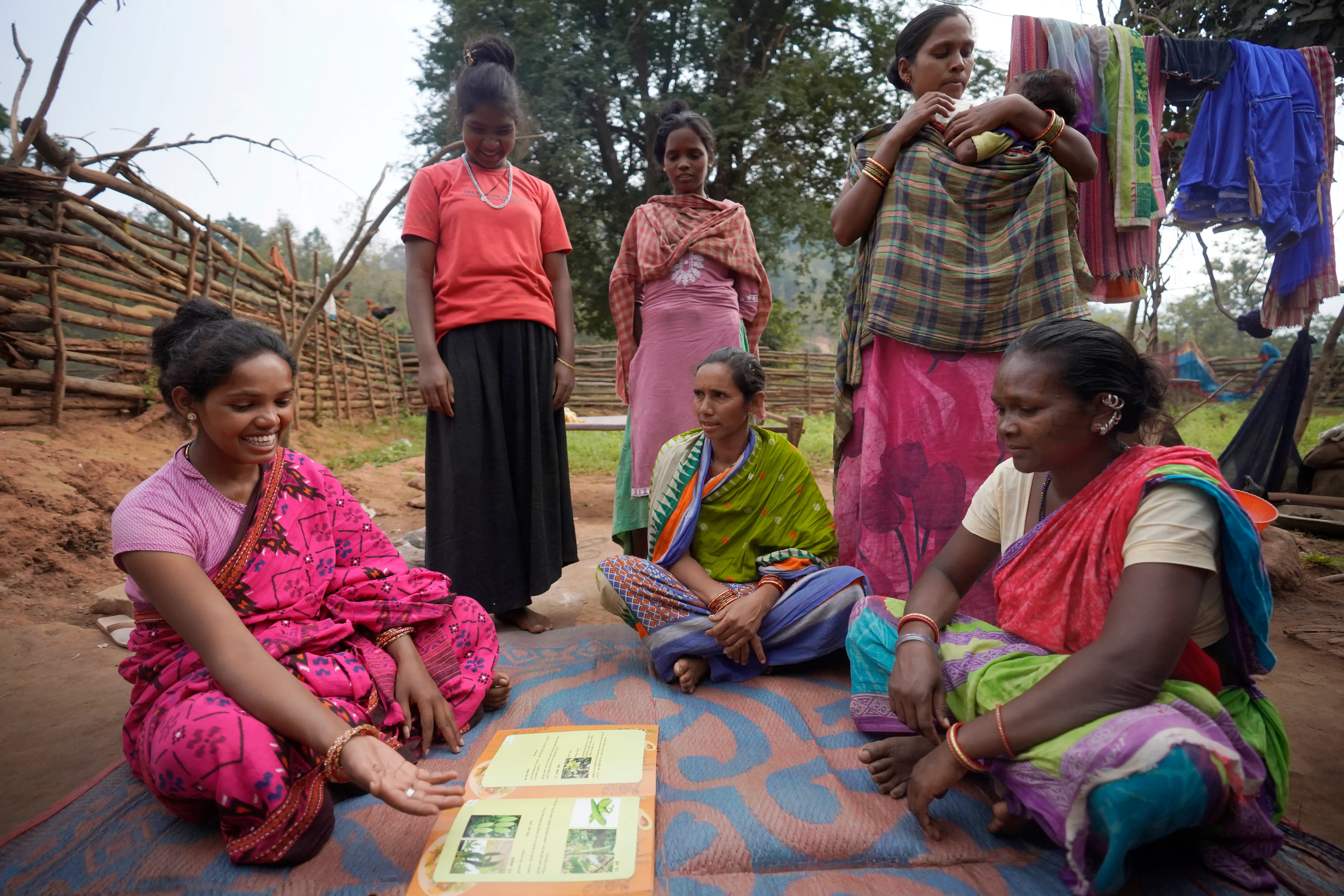
Project CLAN (Community-Led Action on Nutrition), led by Kandhamal Zilla Sabuja Vaidya Sangathan (KZSVS) in collaboration with Vitamin Angels India, serves as one of the pilots that demonstrates this phenomenon. Operating in the challenging terrains of the Daringbadi area within Odisha’s Kandhamal district (classified as an aspirational district by NITI Aayog), CLAN targets hard-to-reach communities with scant data on crucial nutrition indicators.
The CLAN initiative was spearheaded by eight women leaders chosen by the community, from within the community (Poshan Ma-elis), to drive change within households. Instead of solely focusing on outcomes, the intervention centred on cultivating a community platform capable of driving various interventions through a hub and spoke model. Once the Poshan Ma-elis — ‘Friends of Nutrition’ — were trained with knowledge of their rights, government schemes, and decision-making abilities, it significantly enhanced their agency to drive change within their own community.
(Mishra, A. (2024, March 11). Building sustainable platforms: Creating lasting impact in public health initiatives. Medium.